Before and After Photos as Marketing for Naperville Fitness

What if the most dramatic fitness transformation you’ve seen online was actually a failure of clinical ethics? It’s natural to feel discouraged by the endless stream of “miracle” results that dominate your feed, especially when they lack transparency. You’ve likely felt a deep skepticism toward before and after photos as marketing, questioning if those rapid changes are safe or even real. It’s confusing to determine what a healthy rate of change looks like when you’re bombarded with unrealistic body standards.
This article will help you look past the “shock” imagery to evaluate transformation photos through a professional lens that prioritizes truth and long-term health. We’ll explore how modern body composition analysis provides the data that photos alone cannot. You’ll learn to spot misleading marketing by understanding the 2026 standards for clinical photography and FTC disclosure requirements. By the end, you’ll know how to find a Naperville partner who uses visual evidence as a precise data point rather than a sales tactic, ensuring your own journey is rooted in science and personal integrity.
Key Takeaways
- Understand the neurobiology behind why the human brain prioritizes visual proof and how this affects your perception of fitness success.
- Learn to identify common manipulation tactics used in before and after photos as marketing, helping you separate genuine physiological change from clever lighting and posture.
- Discover the clinical standards for ethical progress photography, including the importance of standardized protocols and HIPAA-compliant privacy frameworks.
- See why professional body composition analysis is essential for validating visual changes by tracking specific metrics like skeletal muscle mass and visceral fat loss.
- Explore how a Ph.D.-led approach in Naperville uses visual evidence as a personalized teaching tool within a private, non-judgmental training environment.
Why Before and After Photos Dominate Fitness Marketing
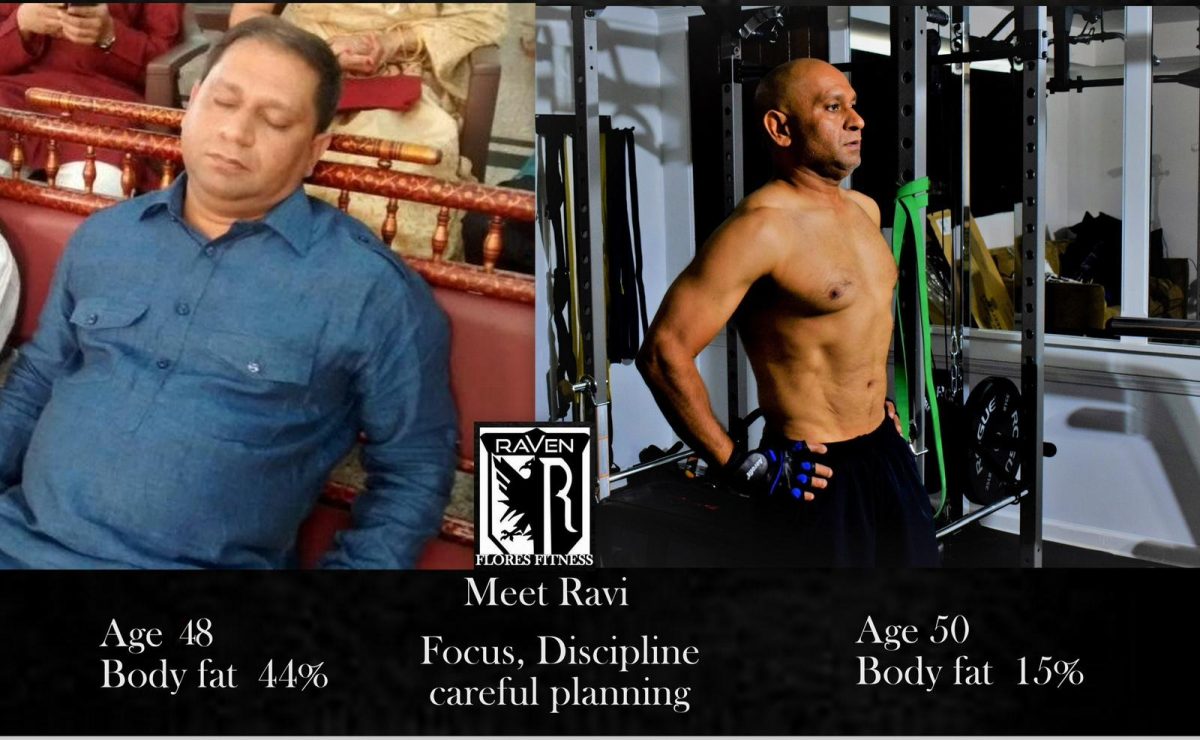
The use of before and after photos as marketing is far more than a simple advertising tactic; it serves as a visual testimonial of physiological change. When you look at a transformation image, you aren’t just seeing a body. You’re seeing the tangible result of a structured methodology. This visual evidence acts as a bridge between your current frustrations and the reality of what is possible through disciplined effort. In a professional wellness setting, these images are used to reduce the perceived risk of starting a new program. They provide social proof that the system works for people in our Naperville community who share your specific challenges.
Your brain is hardwired to prioritize visual information over text. Neurobiologically, we process images significantly faster than written descriptions. This is why a single photo often carries more weight than a page of written reviews. However, it’s vital to distinguish between aspirational marketing, which can sometimes lean toward deceptive marketing practices, and evidence-based documentation. While flashy ads focus on “miracles,” a clinical approach uses these photos to truthfully reflect a client’s health journey. This level of transparency is essential for building a supportive partnership based on reliability and serious commitment.
The Psychology of Transformation Imagery
Why do we react so strongly to these images? When you view a successful transformation, your mirror neurons fire. This creates an internal “if they can, I can” response. It isn’t just about vanity. It’s about seeing a peer overcome the same hurdles you face, whether that’s metabolic changes or lifestyle constraints. This visual proof builds immediate trust in a professional’s methodology. For many, this imagery provides the emotional spark needed to move from a state of uncertainty to professional resolution, knowing that a bespoke plan can lead to similar longevity and holistic health.
Visual Proof vs. Scientific Data
Can a photo really tell the whole story? A photo often captures what a standard scale misses, especially during body recomposition. If you lose fat but gain muscle, the scale might stay the same, but the visual change is undeniable. We must also recognize the limitations of 2D imagery. A photo cannot show visceral fat levels or skeletal muscle mass. This is why pairing before and after photos as marketing with clinical metrics, such as body composition analysis, is necessary for total transparency. It moves the conversation from simple aesthetics to a comprehensive, data-driven view of your physical success.
The Hidden Dangers of Misleading Transformation Imagery
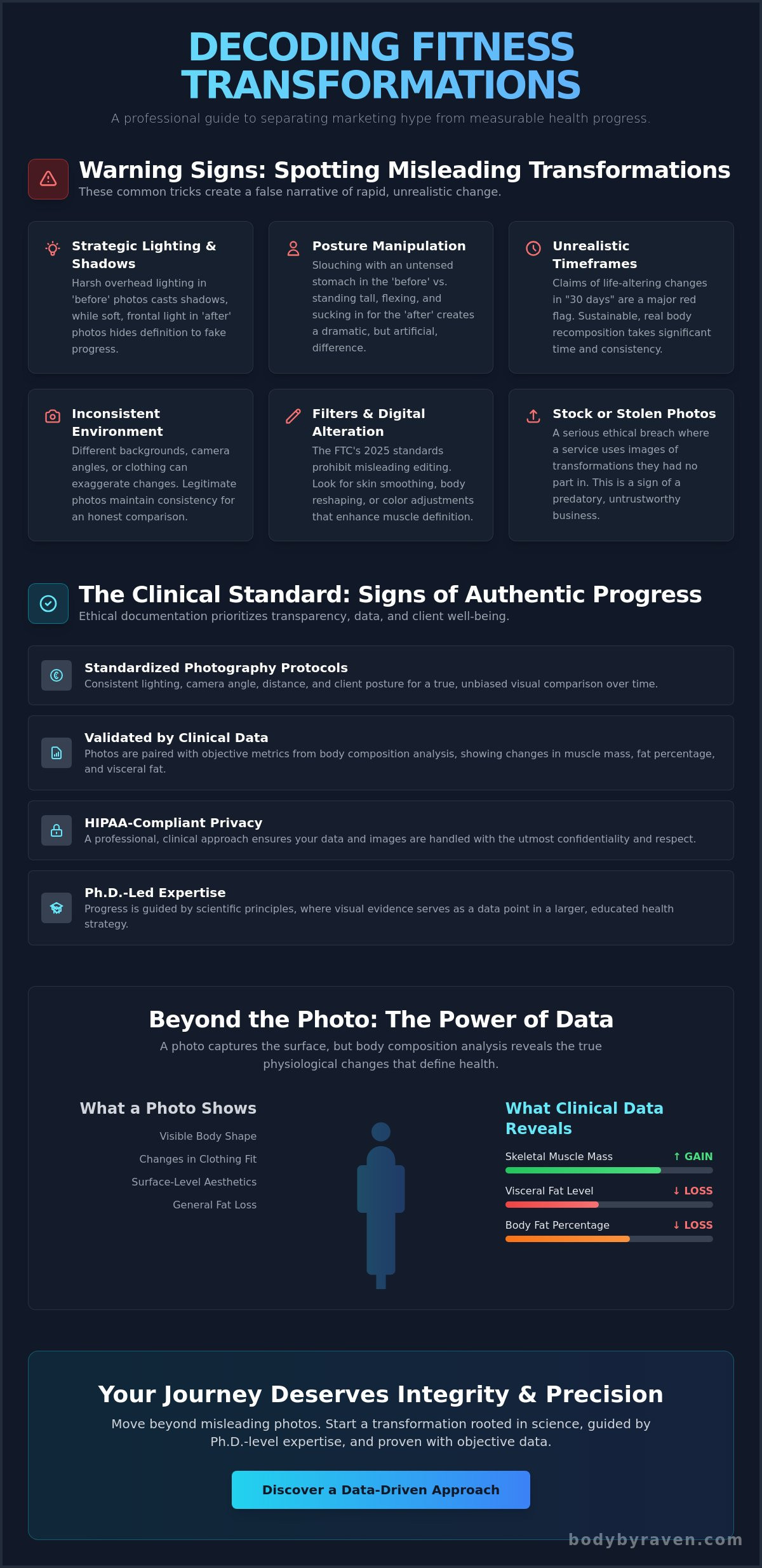
The prevalence of before and after photos as marketing has unfortunately led to a rise in deceptive practices that prioritize a quick sale over client well-being. Many individuals are misled by images that use strategic lighting, specific posture adjustments, or even the natural difference between morning and evening abdominal bloat to simulate progress. These manipulations create a false narrative of rapid change that is often physically impossible. As of September 2025, the FTC’s truth-in-advertising standards strictly require that these images are not misleadingly edited with filters or lighting tricks. When professionals ignore these guidelines, they don’t just risk legal repercussions; they damage the trust that is foundational to a successful health partnership.
Predatory marketing practices often involve the use of stock or stolen transformation photos, which is a significant ethical violation. Using someone else’s physical labor to sell a service you didn’t provide is a betrayal of professional rigor. This behavior undermines the credibility of the entire fitness industry, making it harder for individuals to find legitimate, science-based support. In a close-knit community like Naperville, maintaining professional integrity is the only way to build a sustainable practice that truly serves its residents. Authentic progress should be a reflection of a bespoke plan, not a manufactured illusion designed to exploit vulnerability.
Spotting the ‘Fitness Marketing’ Red Flags
How can you tell if a transformation is authentic? Look for consistency in the environment. If the background, lighting, or camera angle changes significantly between the “before” and “after,” the results are likely exaggerated. Be wary of extreme transformations that occur in “too-good-to-be-true” timeframes. Real, sustainable body recomposition takes time and discipline. Authentic documentation should always be accompanied by details regarding the specific nutrition plan or training methodology used. Without this context, a photo is just a hollow claim that lacks clinical depth.
The Psychological Cost of Deception
The most damaging aspect of faked imagery is the “failure loop” it creates for the client. When you’re sold a result that was achieved through lighting rather than lifestyle change, you’ll inevitably feel like you’ve failed when you cannot replicate it. This erosion of the coach-client relationship happens before the first session even begins. Choosing a private personal training environment that values data over shock imagery ensures that your expectations remain grounded in reality. This approach protects your mental health and fosters the discipline required for long-term physical change. Trust is built on transparency, not on the temporary excitement of a filtered image.
Clinical Standards for Ethical Visual Marketing
Maintaining clinical integrity requires more than just a camera and a willing participant. It demands a standardized protocol that ensures every image is a fair and accurate representation of physiological change. When we use before and after photos as marketing in a professional Naperville setting, we must adhere to the same rigor found in medical environments. As of 2026, clinical photography standards emphasize consistent procedures for positioning, lighting, and camera angles. Using a neutral, non-distracting background, such as the light blue medical standard, ensures that the focus remains entirely on the client’s physical progress rather than environmental variables.
A “Privacy First” framework is essential for any high-end consultancy. Under HIPAA guidelines updated in August 2025, photographs are considered Protected Health Information (PHI) if they contain identifiable features like full faces or unique tattoos. This means written consent is a non-negotiable requirement for any use of these photos outside of private treatment. We also believe in the importance of client agency. Whether a client chooses full identification or complete anonymization, they must have total control over how their image is presented. Furthermore, the ethics of incentivizing photos through discounts can be problematic. True testimonials should be voluntary and based on a desire to share success, not a financial transaction that might pressure a client into sharing before they are ready.
Standardizing the ‘After’ Photo
Consistency is the hallmark of professional documentation. To ensure an honest representation, photos should be taken at the same time of day with similar hydration levels. This minimizes the natural daily fluctuations that can mimic or mask real progress. We discourage “flexing” or “sucking in” during these sessions. While these tactics might create a more striking image, they fail to provide an accurate baseline for a Ph.D.-led wellness program. For high-end coaching clients, a “real” photo that shows genuine structural change is far more persuasive than a “perfect” one that relies on temporary effort. Honest imagery fosters a sense of reliability and serious commitment.
The Informed Consent Checklist
Ethical marketing requires clear and specific communication. Informed consent should never be a broad, all-encompassing waiver. Instead, it should be a checklist that allows clients to grant permission for specific platforms, such as a private website versus a public social media feed. It’s equally important that clients know they have the right to revoke this consent at any time without penalty. We view these photos as educational tools. When a client understands how their journey can help others understand the science of body composition, the process becomes a collaborative effort in health education rather than a simple marketing exercise.
Integrating Body Composition Analysis into Visual Evidence
In a Ph.D.-led wellness program, visual evidence is only half the story. While before and after photos as marketing catch the eye, they don’t provide the clinical precision required for a true health transformation. We use data to explain exactly why a client looks different. It’s about distinguishing between mere “weight loss” and actual “fat loss.” Many Naperville residents focus on the scale, but we prioritize the loss of visceral fat and the preservation of skeletal muscle mass. This approach ensures that the changes you see in the mirror are reflected in your internal health markers rather than just temporary water loss.
The Role of Kinesiology in Visual Change
Visual transformations are often the result of improved kinesiology. Better posture and increased muscle tone fundamentally change how a body appears in a 2D image. This is the essence of body recomposition. You might find that the scale hasn’t moved, yet your clothes fit differently and your silhouette is tighter. This phenomenon is why we emphasize weigh ins in Naperville that look beyond simple poundage. We track progress through structural changes that reflect your body’s functional strength. It’s not just about looking better; it’s about moving better and feeling more confident in your physical capabilities.
Data Points That Support the Photo
To ensure total transparency, we pair every photo with high-grade body composition analysis. We use Direct Segmental Multi-Frequency Bioelectrical Impedance Analysis (DSM-BIA) to track specific metrics. These devices have shown a 98% correlation with DEXA scans, providing a reliable, clinical baseline for your journey.
- Body fat percentage: We ensure the weight lost is actually fat, specifically targeting visceral fat that surrounds internal organs.
- Basal Metabolic Rate (BMR): We track how your muscle gains fuel your metabolism, ensuring your body becomes a more efficient engine.
- Intracellular water: This metric helps us monitor cellular health and proper hydration, which are vital for recovery and longevity.
This clinical rigor is supported by nutrition coaching in Naperville, which provides the biological foundation for your visual results. By using these metrics, we prove that your transformation is both healthy and sustainable for the long term. If you want to understand the science behind your own progress, our body composition analysis provides the clarity you need to succeed with confidence.
The Body by Raven Methodology for Documenting Success
Dr. Raven Flores, Ph.D., approaches visual evidence as a sophisticated teaching tool rather than a mere promotional asset. While many commercial gyms use before and after photos as marketing to drive high-volume sales, our methodology focuses on the educational value of these images. We use them to help you understand how your body responds to specific nutritional and physical stimuli. This creates a sense of transparency and intellectual engagement that builds confidence in the process. By viewing your transformation through a clinical lens, we move away from “miracle” narratives and toward a serious commitment to long-term sustainability. It’s about your success, documented with professional rigor.
A Boutique Approach to Client Privacy
How does a private setting change the experience of documenting progress? A private personal trainer Naperville environment offers a safer, non-judgmental space for capturing vulnerable milestones. We understand that the journey toward health is deeply personal. Our boutique consultancy prioritizes the individual over the social media “post,” ensuring that your documentation remains part of your private health record unless you choose otherwise. We maintain a strict focus on clinical accuracy over marketing hype. This disciplined, no-nonsense approach ensures that every data point, visual or otherwise, serves your specific needs and life stage.
Your Journey Beyond the Lens
The most impactful changes often occur where the camera cannot reach. While we use before and after photos as marketing to demonstrate the efficacy of our Ph.D.-led coaching, the real success lies in your newfound mental focus, direction, and confidence. Our goals extend beyond aesthetics to prioritize functional strength and longevity. We believe the most powerful “after” photo is one that reflects a person who is both physically resilient and deeply invested in their own success. This is the hallmark of a bespoke health partnership.
We invite Naperville residents ready for a significant lifestyle change to experience a methodology rooted in professional rigor. Your transformation should be a comprehensive, multi-faceted process that integrates nutritional guidance with expert physical training. Take the first step toward a more disciplined version of yourself. You can book a consultation to see what a science-backed weight loss service looks like when it’s led by clinical expertise. We’re here to be your steady guide in a partnership built on truth and physical excellence.
Commit to a Truthful Path Toward Health
Choosing a fitness partner requires looking beyond the surface. We have explored how professional body composition analysis and clinical photography standards provide a level of transparency that simple snapshots cannot match. By prioritizing truth over “shock” imagery, you protect both your mental well-being and your long-term physical success. You now understand that before and after photos as marketing should serve as educational data points rather than manipulative sales tactics. True transformation is about more than just a change in silhouette; it’s about gaining the mental focus and functional strength needed for a vibrant life.
Our boutique methodology ensures your progress is documented in a safe, non-judgmental environment where your privacy is the top priority. It’s time to move past the failure loops of faked results and embrace a disciplined, data-driven approach. Start Your Science-Backed Transformation with Body by Raven to experience the difference of Ph.D. led coaching in our private Naperville studio. With clinical body composition analysis guiding every step, you can move forward with absolute clarity. You are ready for a lifestyle change that lasts.
Frequently Asked Questions
Are before and after photos in fitness marketing always misleading?
No, but they require clinical context to be truthful and transparent. Many practitioners use before and after photos as marketing to showcase real physiological change; however, without accompanying data like body composition, they only tell a partial story. Ethical trainers provide specific details on the timeline and the methodology used. This ensures you understand the result came from disciplined effort rather than a temporary quick fix.
How can I tell if a transformation photo has been digitally altered?
Look for subtle inconsistencies in the background, floor lines, or lighting. If the environment’s geometry appears warped or the shadows don’t align with the light source, the image might be manipulated. Notice if the “after” photo has a different skin tone or blurred textures around the waistline. Genuine professional photos maintain the same environment, clothing style, and camera angle to ensure physical change is the only variable.
Is it ethical for a personal trainer to ask for progress photos?
Yes, it’s ethical when used as a clinical assessment tool within a private, non-judgmental environment. Progress photos help both the trainer and client track structural changes and posture improvements that a standard scale might miss. The ethics depend entirely on informed consent and the protection of your privacy. A professional will always explain how these photos serve your specific health goals before documenting any milestones.
What is more accurate than a before and after photo for tracking progress?
Clinical body composition analysis is the gold standard for tracking real progress with precision. While before and after photos as marketing provide a visual narrative, data from bioelectrical impedance analysis offers precise metrics on skeletal muscle mass and visceral fat. This scientific approach removes the guesswork. It proves your transformation is rooted in healthy, sustainable physiological changes rather than just temporary water weight fluctuations.
Do I have to allow my trainer to use my photos for their marketing?
No, you have total control over your images and how they are used. Under updated HIPAA guidelines, your photos are considered protected health information. You must provide explicit, written consent for any use outside of your private training sessions. A reputable Naperville consultancy will always respect your decision to keep your journey private or anonymized. Your comfort and privacy take precedence over any promotional needs.
How often should progress photos be taken to see real results?
Taking photos every four to six weeks is generally sufficient to observe meaningful structural changes. Body recomposition is a gradual process that requires discipline and patience. Daily or weekly photos often lead to frustration because physiological changes don’t happen overnight. By spacing out these sessions, you allow enough time for your nutrition and training plan to produce visible, sustainable results in your physique and posture.
What should I look for in a trainer’s portfolio to ensure they are legitimate?
Look for consistency in their documentation and clear evidence of a proprietary methodology. A legitimate portfolio should feature a variety of body types and age groups, reflecting a bespoke approach to coaching. Check for accompanying data points or descriptions of the kinesiology used. If the photos look overly polished or lack details on the timeline, it’s a sign to ask more probing questions about their professional rigor.
Can before and after photos trigger body dysmorphia or negative self-image?
Yes, constant exposure to “perfect” or manipulated imagery can negatively impact your mental health. This is why we prioritize a clinical lens over “shock” marketing tropes. We focus on functional strength and longevity rather than just aesthetic perfection. By shifting the focus to data and personal milestones, we help you build a healthier relationship with your body. Professional support should always encourage confidence and mental focus alongside physical change.




Leave a Reply