How Much Protein to Eat to Lose Weight in 2026: A Ph.D.-Led Guide

Did you know that the federal RDA for protein was officially revised in 2026 to a range of 1.2 to 1.6 grams per kilogram of body weight? This shift confirms what we’ve practiced at Body by Raven LLC for years. If you’re wondering exactly how much protein to eat to lose weight, you’ve likely realized that the old standards were insufficient for maintaining a healthy metabolism. You aren’t alone if you’ve struggled with constant hunger or noticed your muscle tone fading while following generic advice from fitness apps.
A high-protein diet won’t make you look bulky; it actually helps you achieve a lean, defined physique by preserving muscle while fat is lost. Bulking is the result of a significant caloric surplus combined with specific heavy lifting protocols. When determining how much protein to eat to lose weight, the goal is to create a “toned” appearance by protecting your metabolic engine; if you are looking for a structured way to build that muscle, you can learn more about CrossFit Classes and how professional coaching supports body transformation.
You deserve a strategy that treats your muscle as a metabolic shield. In this Ph.D.-led guide, you’ll learn the exact clinical calculations to determine your daily needs without sacrificing the lean tissue that keeps your calorie-burning engine running. We’ll move past the guesswork with personalized nutrition targets tailored for adults over 40 and those utilizing modern weight-loss medications. This article provides a clear roadmap to help you reach your protein goals, improve your body composition, and finally achieve sustainable weight management without the “yo-yo” effect.
Key Takeaways
- Discover how protein functions as a metabolic shield to burn more calories during digestion while preserving your essential muscle tissue.
- Identify the exact clinical calculations to determine how much protein to eat to lose weight by focusing on your target goal weight.
- Learn why complete amino acid profiles and high bioavailability scores are necessary for a successful body transformation.
- Implement “Protein Pacing” to distribute your intake effectively for better satiety and consistent muscle support throughout the day.
- Understand the value of a personalized nutrition strategy that bridges the gap between clinical data and your unique lifestyle in Naperville.
The Metabolic Science: Why Protein is Non-Negotiable for Fat Loss
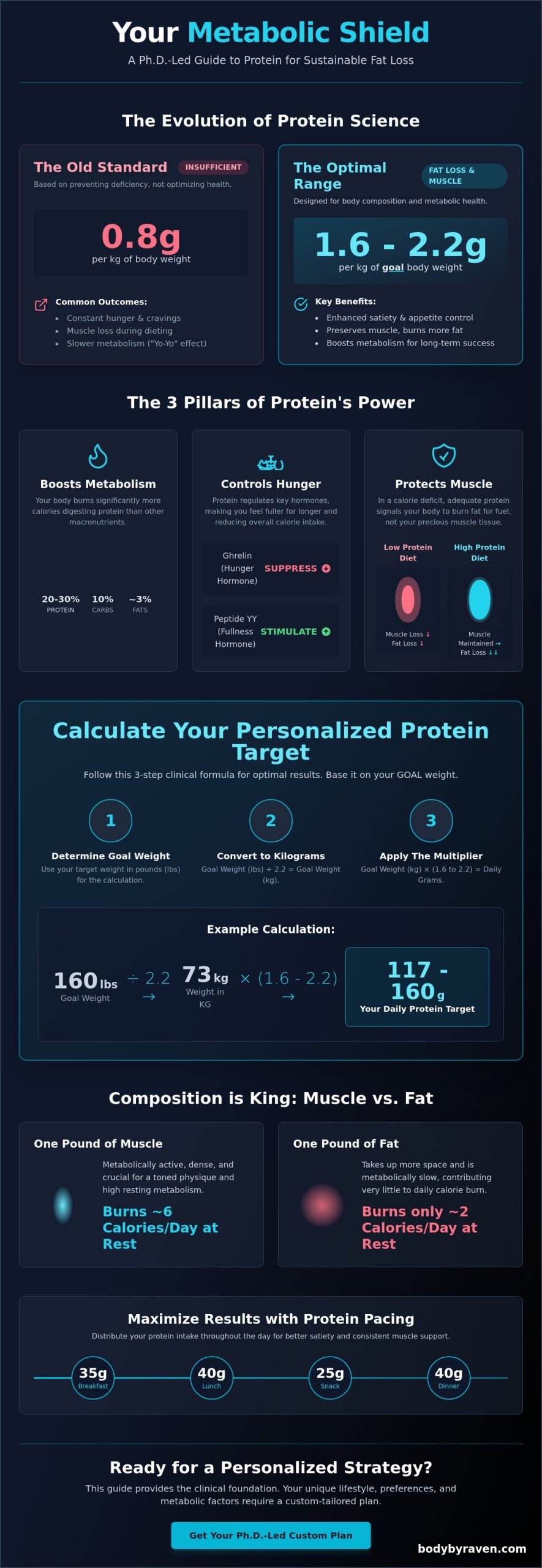
Understanding The Metabolic Science of nutrition is the essential first step toward a successful body transformation. Protein isn’t just another macronutrient; it’s the structural foundation of your lean tissue and the primary driver of your metabolic health. Determining how much protein to eat to lose weight requires looking beyond simple calorie counting. Unlike fats or carbohydrates, protein has a high Thermic Effect of Food (TEF). This means your body uses 20% to 30% of the calories consumed from protein just to digest and process it. In contrast, fats only require about 3% and carbohydrates use 10%. By increasing your protein intake, you’re essentially turning up your body’s internal furnace.
Protein also acts as a powerful appetite regulator by directly influencing your brain’s hunger signals. It works by suppressing ghrelin, the hormone responsible for hunger, while simultaneously stimulating peptide YY, which makes you feel full. This dual action prevents the constant hunger that often dooms traditional dieting attempts. Perhaps most importantly, protein provides a muscle-sparing effect. When you’re in a caloric deficit, your body looks for energy sources. Without adequate protein, it will break down your muscle tissue for fuel. This leads to a lower metabolic rate, making it harder to keep the weight off long-term. Maintaining your muscle mass ensures your metabolism remains high even as you lose fat.
The “Fitness After 40” Factor: Overcoming Anabolic Resistance
As we age, our bodies become less efficient at processing protein, a condition known as anabolic resistance. For the busy Naperville professional, this means that the standard RDA is no longer enough to maintain health. You need a higher protein floor to trigger muscle protein synthesis and avoid sarcopenic obesity, where muscle is replaced by fat despite a stable weight. Identifying how much protein to eat to lose weight is particularly critical for those over 40 who are balancing high-stress careers with health goals. At Body by Raven LLC, we emphasize that personalized nutrition is the only way to combat this age-related decline and ensure metabolic longevity.
Protein vs. Scale Weight: Why Composition Matters More
Are you losing fat or just losing weight? There’s a vital difference between the two. Traditional dieting often results in the loss of both fat and valuable muscle, which ruins your body’s shape and health. We use advanced body composition analysis to ensure your progress is coming from the right places. One pound of muscle tissue burns approximately 6 calories per day at rest, whereas one pound of adipose tissue burns only about 2 calories. Preserving that muscle is the key to a sustainable transformation and a confident, capable physique.
Calculating Your Personalized Protein Target: A Step-by-Step Guide
Generic fitness apps often fail because they rely on outdated algorithms that don’t account for your specific metabolic needs. To truly understand how much protein to eat to lose weight, you must move beyond the standard Recommended Dietary Allowance (RDA) of 0.8 grams per kilogram. This baseline was established to prevent malnutrition, not to facilitate fat loss or muscle preservation. Research into the science of protein suggests that an optimal range for active adults seeking body transformation falls between 1.6 and 2.2 grams per kilogram of body weight.
One critical distinction involves your starting point. If you have a significant amount of fat to lose, calculating needs based on current total body weight can lead to overconsumption. Instead, use your goal weight or an adjusted body weight for these equations. Adipose tissue is metabolically different from muscle and does not require the same protein support. For example, a 200-pound individual with a goal weight of 160 pounds (approximately 73kg) would aim for roughly 117 to 160 grams of protein daily. This precision ensures you’re fueling your engine without overshooting your caloric requirements.
Step 1: Determine Your Lean Body Mass
The most accurate method for determining your protein floor is basing it on lean body mass rather than total weight. By subtracting your body fat percentage from your total weight, you identify the exact weight of your muscle, bones, and organs. This is the “gold standard” in clinical nutrition because it targets the tissue that actually requires amino acids for repair. Professional weigh ins using medical-grade bioelectrical impedance provide the necessary data to establish this baseline with clinical accuracy. Knowing these numbers prevents the common mistake of under-eating, which often leads to metabolic slowing.
Step 2: Match Protein to Your Activity Level
Your daily protein requirement isn’t a static number. On sedentary days, you might stay at the lower end of the 1.6g/kg range. However, on days involving intense resistance training, your needs increase to facilitate recovery. Sessions with a private personal trainer Naperville require a higher intake to meet the “Leucine Threshold.” This is the specific amount of the amino acid leucine, typically 2.5 to 3 grams per meal, needed to trigger muscle protein synthesis. Without hitting this threshold, your body won’t fully repair the micro-tears created during a workout. If you’re ready to stop guessing and start seeing results, scheduling a body composition analysis is the best way to find your exact numbers.
Quality Over Quantity: The Science of Amino Acid Profiles
While calculating total grams provides a necessary foundation, the internal composition of those grams determines how effectively your body repairs tissue. Not all protein sources are created equal. To understand how much protein to eat to lose weight, you must also consider the biological value of what you consume. A complete protein contains all nine essential amino acids that your body cannot produce on its own. Animal-based sources like poultry, fish, and eggs are naturally complete. Many plant-based sources are incomplete, meaning they lack one or more essential building blocks required for muscle preservation.
Clinical nutritionists use the Protein Digestibility Corrected Amino Acid Score (PDCAAS) to measure protein quality. This score, ranging from 0 to 1, evaluates how well a protein meets human amino acid requirements and how easily it is digested. For example, whey protein and egg whites boast a perfect 1.0 score. If you rely on sources with lower scores, you may need to consume higher total volumes to reach your metabolic goals. Additionally, healthy adults don’t need to fear kidney damage from high intake. Decades of clinical data show that as long as you have healthy kidney function and maintain hydration, a high-protein diet is safe and effective for fat loss.
Leucine-Rich Foods: The Key to Muscle Preservation
Leucine is the primary “on switch” for muscle protein synthesis. For our “Fitness After 40” clients, hitting a specific leucine threshold is the only way to overcome anabolic resistance and maintain lean mass. You should aim for 2.5g to 3g of leucine per meal to trigger the repair process effectively. Incorporating leucine rich foods such as lean beef, salmon, and Greek yogurt ensures you’re hitting these clinical targets. Plant-based dieters must carefully complement their proteins, such as pairing rice with beans or choosing soy, to reach these essential triggers and prevent muscle wasting during a caloric deficit.
Whole Foods vs. Supplements: When to Use Protein Powder
Body by Raven LLC operates on a “Food First” philosophy. Whole food sources provide a complex matrix of micronutrients and fiber that supplements cannot replicate. However, high-quality whey or vegan isolates are valuable tools for the busy Naperville professional. A post-workout shake is often the most efficient way to deliver amino acids to your muscles when you’re transitioning from a training session to a business meeting. When choosing a supplement, always read labels to avoid hidden sugars, artificial thickeners, and fillers. Your goal is to find a clean product that supports your personalized nutrition plan without adding unnecessary caloric bulk.
Practical Implementation: Timing and Daily Distribution
Many individuals make the mistake of back-loading their protein intake, consuming a small breakfast and a massive dinner. Your body’s ability to utilize amino acids for muscle repair is limited per sitting, meaning that a 100-gram protein steak at 8:00 PM won’t compensate for a protein-deficient afternoon. Research indicates that distributing 25 to 40 grams of protein across four to five meals is significantly more effective than one large daily dose. This method, often called “Protein Pacing,” ensures a steady supply of nutrients to your tissues and keeps your metabolic rate elevated throughout the day. When you’re deciding how much protein to eat to lose weight, remember that the “when” is just as important as the “how much.”
Starting your day with a high-protein breakfast is a non-negotiable strategy for long-term success. Consuming at least 30 grams of protein within an hour of waking helps stabilize blood sugar and suppresses the evening cravings that often derail progress. For the busy Naperville professional, this might look like a prepared egg white frittata or a high-quality Greek yogurt bowl. Prepping these staples on a Sunday afternoon allows you to maintain your personalized nutrition plan even during a hectic work week. Consistency is the bridge between clinical data and visible body transformation.
The Pre-Sleep Protein Strategy
Your body enters a catabolic state while you sleep, where it may begin breaking down muscle tissue for energy. Consuming 20 to 30 grams of slow-digesting casein protein before bed can mitigate this risk. Casein forms a gel-like substance in the stomach, providing a “trickle” of amino acids for up to seven hours. This overnight support not only preserves lean mass but has been shown to improve metabolic rate the following morning. Low-fat cottage cheese or a specialized casein shake are excellent options for the late-night professional who needs a convenient recovery tool.
Managing Hunger with High-Volume Protein
The “Protein Leverage Hypothesis” suggests that humans will continue to eat until they meet a specific protein threshold. If your meals are too low in protein, you’ll naturally overeat fats and carbohydrates to satisfy this internal drive. You can “hack” this system by choosing high-volume, low-calorie proteins like white fish, shrimp, or egg whites. Combining these with high-fiber vegetables creates a meal that is physically large but calorically lean. This approach allows you to feel full and satisfied while maintaining the deficit required for fat loss. If you’re ready for a plan that removes the guesswork, apply for our nutrition coaching program today.
The Ph.D. Advantage: Customizing Your Nutrition in Naperville
Generic online calculators treat your body like a static math problem. They ignore your metabolic history, current hormonal health, and the specific kinesiology of your movements. When you search for how much protein to eat to lose weight, you’re seeking a solution that fits your actual life, not an average of the general population. Dr. Raven Flores uses a Ph.D.-led approach to bridge the gap between clinical research and your daily routine. This level of professional rigor ensures your personalized nutrition plan works in perfect harmony with your private personal training in Naperville.
True body transformation requires moving beyond simple information into the stage of active transformation. This shift happens through consistent accountability and expert oversight. At Body by Raven LLC, we don’t just hand you a list of numbers; we provide the direction needed to navigate metabolic plateaus and lifestyle stressors. You’re entering a supportive partnership where your health is managed with the precision of a high-end consultancy. Working with a dedicated nutrition coach Naperville IL professionals trust ensures this disciplined, no-nonsense approach is why our clients achieve long-term sustainability rather than temporary, “yo-yo” results.
Beyond the Math: Addressing the Mental Side of Weight Loss
Adherence is the most significant hurdle for any professional balancing a high-stress career with fitness goals. A science-based lifestyle shift is fundamentally different from a standard “diet.” It requires a level of mental focus and confidence that generic apps cannot provide. Naperville residents choose our boutique coaching because they value the specialized mentorship that comes with a Ph.D. perspective. We focus on the discipline required for physical change while remaining empathetic to the challenges of aging. This is the cornerstone of successful Fitness After 40. If you’ve ever wondered whether a medical clinic or a Ph.D.-led coach is the right fit for your goals, exploring the science-based weight loss coaching Naperville professionals rely on can help you separate fact from fiction before making that decision.
Your Next Step: A Professional Consultation
It’s time to stop guessing and start measuring with clinical accuracy. Relying on automated algorithms for your metabolic health is a risk you don’t have to take. By working with a qualified weight loss doctor or specialist, you ensure that every gram of protein and every minute of training serves a specific purpose. We help you define exactly how much protein to eat to lose weight based on your unique body composition analysis. Our methodology is rooted in science, precision, and the privacy of a boutique environment. Book your strategy session today to begin your transformation with a partner who is deeply invested in your individual success.
Take Control of Your Metabolic Future
Successful body transformation is rarely about eating less; it’s about eating with clinical precision. We’ve moved past the era of generic advice into a period where data-driven nutrition is the standard. By implementing the 1.6 to 2.2 grams per kilogram range discussed earlier, you protect your muscle mass and keep your metabolic furnace burning. Understanding exactly how much protein to eat to lose weight removes the anxiety of the “yo-yo” effect and replaces it with the confidence of a science-based strategy. You’ve seen how protein pacing and amino acid quality act as the foundation for long-term health, especially for the Fitness After 40 demographic.
You don’t have to navigate these complex calculations alone. Dr. Raven Flores combines a Ph.D. in Kinesiology and Nutrition with a private, one-on-one boutique environment to ensure your success is measurable and sustainable. Through data-driven body composition tracking, we bridge the gap between clinical science and your daily lifestyle. It’s time to stop guessing and start transforming your physique with professional oversight. Schedule Your Ph.D.-Led Nutrition Consultation in Naperville today. You’re ready for a partnership that prioritizes your longevity and metabolic health.
Frequently Asked Questions
How much protein is too much for weight loss?
Protein only becomes “too much” when it displaces other essential nutrients or causes you to exceed your daily caloric limit. For healthy individuals, clinical studies show that intakes as high as 3.4 grams per kilogram of body weight don’t result in fat gain. However, staying within the optimal range of 1.6 to 2.2 grams per kilogram is usually sufficient for most clients in Naperville.
Can I lose weight by only eating protein?
Weight loss requires a caloric deficit, but eating only protein isn’t a sustainable or healthy long-term strategy. Your body requires essential fatty acids for hormonal health and fiber for digestive function. A Ph.D.-led nutrition plan balances these macronutrients to ensure you lose fat while maintaining the energy needed for your private training sessions.
Does protein powder count toward my daily goal?
High-quality protein supplements definitely count toward your daily total, but they shouldn’t replace whole food sources. Whole foods provide a complex matrix of vitamins and minerals that powders lack. Use whey or vegan isolates as a convenient tool to hit your targets on busy days or as a post-workout recovery boost when you’re on the go.
What happens if I eat my daily protein in just one meal?
Consuming all your protein in one sitting is less effective for muscle preservation than spreading it across several meals. Your body utilizes amino acids for tissue repair most efficiently in doses of 25 to 40 grams. Spacing your intake ensures your muscles remain in a building state throughout the day, which protects your metabolic rate.
Will a high-protein diet make me look bulky?
A high-protein diet won’t make you look bulky; it actually helps you achieve a lean, defined physique by preserving muscle while fat is lost. Bulking is the result of a significant caloric surplus combined with specific heavy lifting protocols. When determining how much protein to eat to lose weight, the goal is to create a “toned” appearance by protecting your metabolic engine.
Is it harder for vegetarians to get enough protein for weight loss?
Vegetarians can reach their fat-loss goals, but it requires more precise planning to hit essential leucine triggers. Plant proteins often have 20% to 40% lower bioavailability scores than animal sources. You’ll need to carefully combine different plant proteins to ensure you’re getting a complete amino acid profile necessary for muscle repair and satiety.
How does protein intake change if I am over 50 years old?
Protein needs increase as you age to combat anabolic resistance and prevent age-related muscle loss. The 2026 federal guidelines recommend 1.2 to 1.6 grams per kilogram for older adults to maintain health. This higher “protein floor” is a critical component of our Fitness After 40 programs, ensuring you maintain strength and metabolic health as you age.
Should I calculate protein based on my total weight or my goal weight?
Calculating how much protein to eat to lose weight is most accurate when based on your goal weight or your lean body mass. If your BMI is over 30, using your current total weight can lead to an unnecessarily high caloric intake. This precision ensures you’re fueling your active muscle tissue without overshooting the calories required for consistent fat loss.





Leave a Reply